
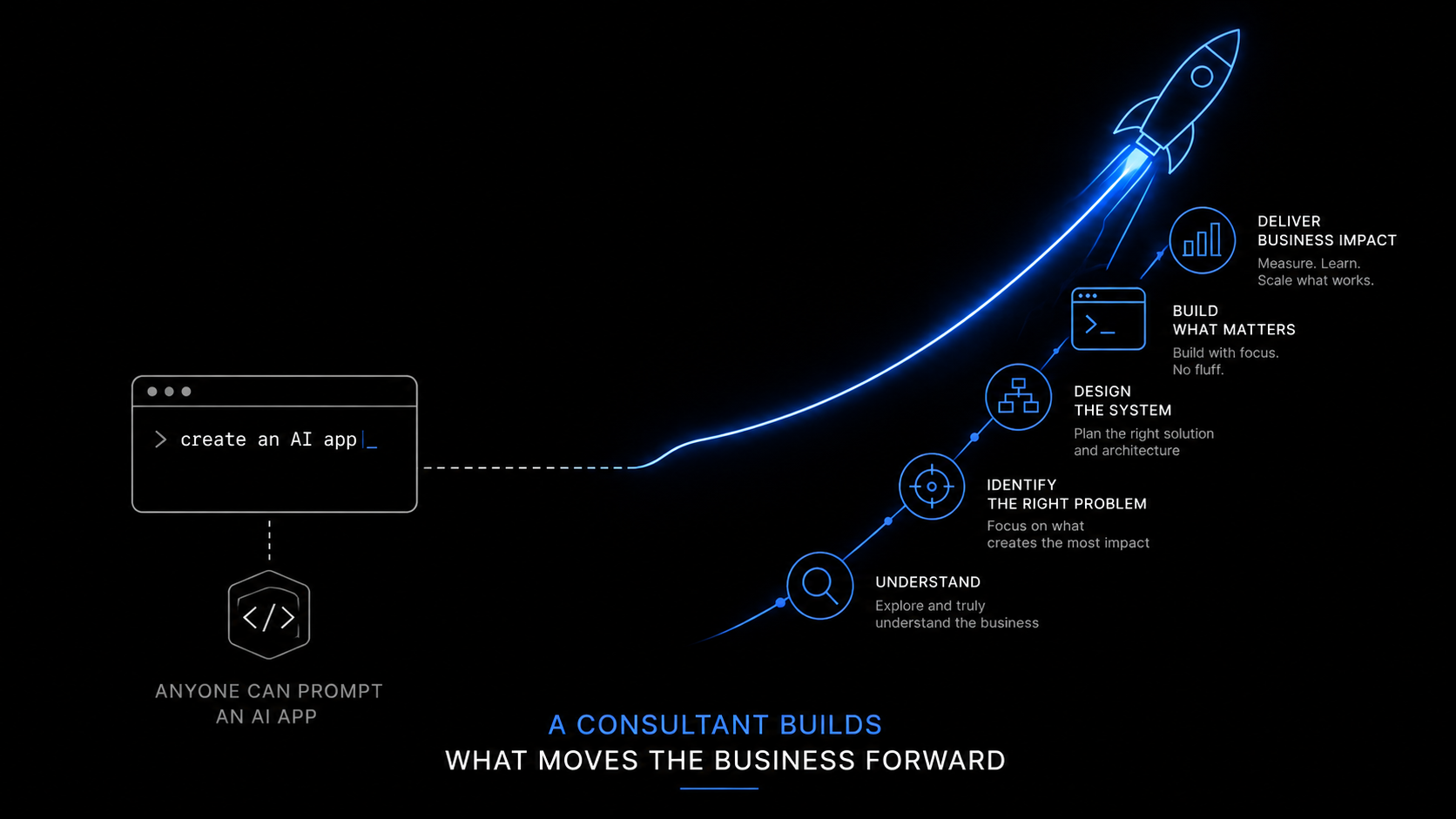
Fair question.
Today, you can describe an idea to an AI tool and have something that looks remarkably like software before lunch.
A dashboard? Sure.
A voice agent? Give it an afternoon.
An inventory app? Quite possibly.
I know, because I build this way too.
So if AI has made building dramatically easier, what exactly is the consultant doing?
The answer is: figuring out what is actually worth building.
When I started working on an inventory problem for a food business, the obvious solution was an inventory management system.
Except “inventory management” wasn't really the problem.
Stock was arriving in batches. Some was being sold. Some was being given away as samples. Staff occasionally added a little extra to an order. Trays were weighed at the end of the day. Older stock could expire.
The real question wasn't How do we track inventory?
It was Why does the physical stock sometimes disagree with what the system thinks should be there?
That question leads to a very different product.
The same thing happened while building a voice sales agent. Making an AI talk was only one small part of it. The interesting questions were around what happens before and after the conversation. Which lead should it call? What does it need to know? When should it stop selling and hand over to a human? What gets recorded? What happens next?
That's where most useful AI work lives.
AI has made execution cheaper. It hasn't made understanding the business automatic.
You still have to find the messy handoffs, exceptions, duplicated work, missing information and those wonderfully dangerous sentences that begin with:
“Usually, we just...”
Then you have to decide whether the answer is AI, automation, ordinary software, a process change, or sometimes nothing new at all.
So yes, anyone can prompt their way to an AI app now.
I think that's fantastic.
It means we can spend less time asking, Can we build this?
And much more time asking the question that actually matters:
Should we?